




Original Article - Year 2026 - Volume 41Issue 1
Evaluation of Quality of Life and Satisfaction in Patients Submitted to Repairing Plastic Surgery after Major Weight Loss: A Prospective Study
Avaliação da qualidade de vida e satisfação em pacientes submetidas a cirurgia plástica reparadora após grande perda ponderal: Um estudo prospectivo
Ana Carolina Vasconcellos Guedes Otsuka1, ; Lauro Fumiyuki Otsuka1; Rebeca Zelice Cruz de Moraes Kim1; Gabriela Suemi Shimizu1; Vinicius Cruz Prieto Silva1; Warley Pereira da Costa1; Flavia Mesquita Soares1; Vitor Buaride1
ABSTRACT
Introduction Major weight loss, often following bariatric surgery, may result in excess skin and body deformities that compromise quality of life. Reconstructive plastic surgery plays an essential role in improving the functional, esthetic, and psychosocial aspects of these patients.
Methods The present prospective study was carried out at Hospital Estadual de Sapopemba (HESAP) in São Paulo, Brazil, from January to June 2022. It aimed to evaluate the quality of life and satisfaction in patients who underwent reconstructive plastic surgery after major weight loss. The study included patients who underwent surgery during this period and completed the 36-Item Short FormHealth Survey (SF-36) before the procedure and at the third postoperative month.We analyzed the following eight health domains: physical functioning, physical limitations, pain, general health status, vitality, social functioning, emotional aspects, and mental health. Statistical analysis used the Student's t-test.
Results Of the 63 patients initially evaluated, 44 completed the study. Most patients were female, with a mean age of 42 years. Seroma was the main complication (31%). Five indicators showed significant improvement: physical functioning, general health status, vitality, social functioning, and mental health. The pain, physical limitations, and emotional aspects domains did not show significant improvement. Most participants reported higher self-esteem and satisfaction with the surgery.
Conclusion Reconstructive plastic surgery following significant weight loss had a positive impact on quality of life and patient satisfaction, resulting in important physical, psychological, and social benefits.
Keywords: plastic surgery; quality of life; prospective studies; obesity; body contouring
RESUMO
Introdução A grande perda ponderal, frequentemente após cirurgia bariátrica, pode resultar em excesso cutâneo e deformidades corporais que comprometem a qualidade de vida. A cirurgia plástica reparadora tem papel essencial na melhora funcional, estética e psicossocial desses pacientes.
Métodos Estudo prospectivo realizado no Hospital Estadual de Sapopemba (HESAP), São Paulo, entre janeiro ejunho de 2022, como objetivo de avaliar a qualidade de vida e a satisfação de pacientes submetidos à cirurgia plástica reparadora após grande perda ponderal. Foram incluídos pacientes operados no período e que responderam ao questionário 36-Item Short FormHealth Survey (SF-36) antes da cirurgia e no 3º mês de pós-operatório. Foram analisados oito domínios da saúde: capacidade funcional, limitações físicas, dor, estado geral de saúde, vitalidade, aspectos sociais, emocionais e saúde mental. A análise estatística foi realizada com o teste t de Student.
Resultados Dos 63 pacientes inicialmente avaliados, 44 completaram o estudo. Houve predomínio do sexo feminino, com média de idade de 42 anos. O seroma foi a principal complicação (31%). Observou-se melhora significativa em cinco indicadores: capacidade funcional, estado geral de saúde, vitalidade, aspectos sociais e saúde mental. Os domínios dor, limitações físicas e aspectos emocionais não apresentaram melhora significativa. A maioria relatou aumento da autoestima e satisfação com a cirurgia.
Conclusão A cirurgia plástica reparadora após grande perda ponderal demonstrou impacto positivo na qualidade de vida e alta satisfação dos pacientes, promovendo benefícios físicos, psicológicos e sociais relevantes.
Palavras-chave: cirurgia plástica; qualidade de vida; estudos prospectivos; obesidade; contorno corporal
Introduction
Obesity is a global epidemic resulting in high morbidity, premature mortality, and substantial costs to healthcare systems.1–3 The estimate for 2025 is that approximately 2.3 billion adults worldwide will be overweight, with about 700 million classified as obese, with a body mass index (BMI) greater than 30 kg/m2. In Brazil, the prevalence of obesity increased by 72% over the past 13 years, rising from 11.8% in 2006 to 20.3% in 2019, with a lower frequency among subjects with higher levels of education.4
Bariatric surgery and strict dietary regimens have proven effective in promoting weight loss and improving obesity-related comorbidities. However, significant weight loss often results in excess skin and redundant subcutaneous tissue.5 This excess compromises body esthetics and may lead to physical discomfort, pain, dermatitis, infections, and significant psychosocial repercussions.6 Thus, as obesity-related comorbidities improve, new esthetic and functional problems emerge, for which many patients are unprepared.7,8
The main body deformities resulting from massive weight loss include: (1) vertical and horizontal excess skin on the abdomen; (2) breast flaccidity and atrophy; (3) thigh flaccidity; (4) arm flaccidity; (5) excess dorsal skin; (6) gluteal ptosis; and (7) pubic ptosis.9,10 These changes may negatively affect patients’ self-esteem, body image, and quality of life.
The World Health Organization (WHO) defines quality of life as “an individual’s perception of their position in life in the context of the culture and value systems in which they live and in relation to their goals, expectations, standards and concerns.”11 Even minor body deformities or esthetic imperfections may generate psychological discomfort, feelings of inferiority, and emotional conflicts.12
Therefore, the assessment of quality of life constitutes an essential tool for measuring the impact of reconstructive plastic surgery on patients who have undergone major weight loss. Among the available instruments, the 36-Item Short Form Health Survey (SF-36) stands out for its widespread use and validated reliability in different clinical contexts.13,14 The SF-36 comprises eight domains—physical functioning, physical aspects, pain, general health status, vitality, social functioning, emotional aspects, and mental health—allowing for a comprehensive evaluation of a subject’s physical and psychological wellbeing.
Objective
The current study aims to evaluate the quality of life and patient satisfaction among subjects undergoing reconstructive plastic surgery after major weight loss.
Methods
The present prospective, observational, and analytical study aimed to compare the quality of life before and after reconstructive plastic surgery following a major weight loss. The study was carried out by the Plastic Surgery team at Hospital Estadual de Sapopemba (HESAP), São Paulo, Brazil, from January to June 2022.
The institution’s Research Ethics Committee approved the current study under registration number CAAE 56314422.1.0000.0083. All participants signed an Informed Consent Form (ICF), in accordance with Resolution No. 466/2012 of the Brazilian National Health Council.
Inclusion and Exclusion Criteria
The study involved patients who were indicated for reconstructive plastic surgery and underwent the procedure during the study period. Subjects who did not sign the ICF or completed the questionnaire inaccurately were excluded.
Instrument of Assessment
The assessment of quality of life utilized the SF-36, administered twice: once preoperatively and again during the third month after surgery. The instrument contains 36 items covering eight domains: physical functioning, physical aspects, pain, general health status, vitality, social functioning, emotional aspects, and mental health.
Each domain was analyzed individually, with scores converted to a scale ranging from 0 to 100, in which higher values represent a better perception of quality of life. Score calculation followed the methodological recommendations described in the literature.
Data Collection Procedures
The plastic surgeon responsible for the procedure administered the questionnaires and provided the necessary information about the study. During the preoperative period, 63 patients completed the questionnaire. In the postoperative period, 25 subjects responded to the questionnaire during in-person interviews, while 19 answered it as an online survey using Google Forms (Alphabet Inc.). We excluded two patients who did not complete the postoperative questionnaire, and 17 subjects who did not respond to the second stage, resulting in a total of 44 patients with valid responses at both time points.
In addition to SF-36 data, we collected information regarding epidemiological profile, BMI, type of surgery performed, postoperative complications, psychosocial aspects, degree of satisfaction, educational level, and marital status. Postoperatively, we also asked patients about changes in family and affective relationships, as well as their satisfaction with the surgical outcome.
Statistical Analysis
Data organization used a Microsoft Excel spreadsheet (Microsoft Corp.), version 2013 for posterior statistical analysis, including descriptive exploratory analysis and hypothesis testing. Comparisons between preoperative and postoperative scores used the paired Student’s t-test. Analyses were conducted using the Python programming language in a Jupyter Notebook environment with the pandas, numpy, and scipy.stats packages.
Results
The study included a total of 44 patients who met the inclusion criteria and provided valid responses to the questionnaires in both the pre- and postoperative periods.
Epidemiological Profile
All patients were female, with a mean age of 42 years. Regarding schooling level, 59.1% had completed secondary education, 22.7% had completed higher education, and 18.2% had incomplete higher education. As for marital status, 50% were married, 31.8% were single, and 18.2% were divorced.
Surgical Procedures and Complications
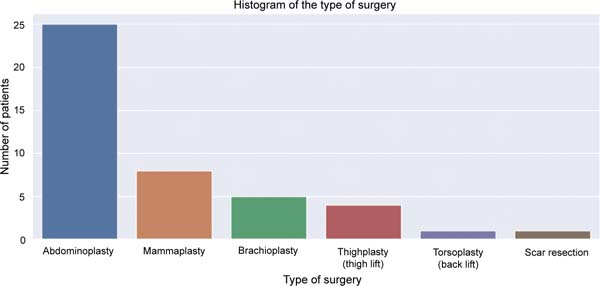
The most performed surgeries were abdominoplasty (56.8%) and mammaplasty (18.2%). ►Fig. 1 shows the remaining procedures. Postoperative complications occurred in 63.6% of the patients, with a higher prevalence of seroma (31%). ►Table 1 compiles other complications.
| Type of complication | Number of patients | Representativity (%) |
|---|---|---|
| Seroma | 5 | 31.25 |
| Surgical wound dehiscence | 3 | 18.75 |
| Hypertrophic scar | 3 | 18.75 |
| Hematoma | 2 | 12.5 |
| Surgical wound dehiscence and wound infection | 1 | 6.25 |
| Hematoma and surgical wound dehiscence | 1 | 6.25 |
| Mondor’s disease | 1 | 6.25 |

Quality-of-Life Assessment (SF-36)
Each patient underwent the exploratory analysis of the SF-36 questionnaire’s eight domains (physical functioning, limitations due to physical aspects, pain, general health status, vitality, social functioning, emotional aspects, and mental health).
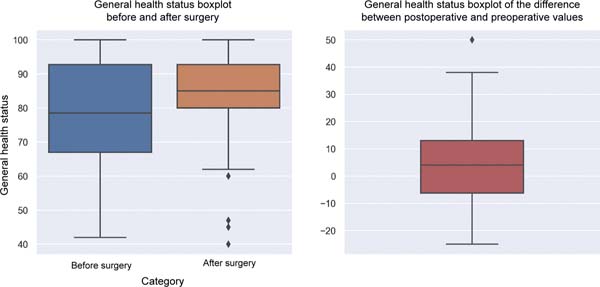
We calculated the difference between pre- and postoperative scores to assess individual variations in each domain. The distribution of this difference showed a concentration in positive values for the general health status and social functioning domains, suggesting a trend toward postoperative improvement (►Fig. 2).
Hypothesis testing used the paired Student’s t-test, with a significance level of α = 0.05. The null hypothesis (H0) postulated that the mean postoperative scores would be equal to the mean preoperative scores, whereas the alternative hypothesis (H1) assumed a difference between mean scores.
The results demonstrated statistically significant differences (p < 0.05) for the physical functioning, general health status, vitality, social functioning, and mental health domains, indicating improved quality of life after reconstructive plastic surgery. The analysis of the domains about limitations in physical aspects, pain, and emotional aspects did not reveal statistically significant differences (►Table 2).
| Indicator | t-test | p-value (t-test) |
|---|---|---|
| Functional capacity | 4.257 | 0.000 |
| Limitations in physical aspects | 1.259 | 0.107 |
| Pain | 1.491 | 0.072 |
| General health status | 1.805 | 0.039 |
| Vitality | 2.809 | 0.004 |
| Social aspects | 2.181 | 0.017 |
| Emotional aspects | 0.895 | 0.188 |
| Mental health | 3.188 | 0.001 |
Abbreviation: SF-36; 36-Item Short Form Health Survey.
Note: Paired Student’s t-test; significance level set as α = 0.05.

Psychosocial Aspects and Satisfaction
Postoperatively, 84.1% of the patients reported improvements in family and affective relationships, and 95.4% stated that they felt more confident about their body image. Regarding overall satisfaction, 100% of the participants reported satisfaction with the surgical outcome and considered the procedure beneficial, despite the physical limitations and discomfort inherent to the recovery period.
Summary of Findings
Overall, the analysis demonstrated significant improvement across multiple quality-of-life domains after reconstructive plastic surgery, reinforcing the positive impact of the procedure on the physical, emotional, and social rehabilitation of patients who experienced major weight loss.
Discussion
The epidemiological profile in the present study showed a predominance of female patients, with a mean age of 42 years, consistent with existing literature. Auricchio and Massarollo15 reported that most women undergoing plastic surgery were between 41 and 50 years of age, with a marked predominance of female patients. This finding may be explained by the fact that women tend to show greater dissatisfaction with body image and are more susceptible to social pressure related to physical appearance.16
In our study, seroma was the most prevalent postoperative complication, occurring in 31% of cases. This frequency is consistent with the literature and may reach up to 30% in patients undergoing post-bariatric surgeries.10,17 Formerly obese patients require special care not only due to clinical and local conditions but also because of psychological factors. A history of obesity, previous treatment experiences, and emotional and social repercussions make this population more vulnerable and demand a multidisciplinary approach.17
Reconstructive plastic surgery primarily aims to improve patients’ quality of life, positively affecting multiple domains, such as general health, physical limitations, physical functioning, vitality, social interaction, mental health, and emotional aspects.12
The present study found statistically significant differences in the domains of physical functioning, general health status, vitality, social functioning, and mental health as measured by the SF-36 questionnaire, indicating an overall improvement in quality of life following surgery. These results corroborate the findings of other authors,18 who also reported significant increases in quality-of-life scores after reconstructive procedures in post-bariatric patients. Conversely, the domains of limitations in physical aspects, pain, and emotional aspects did not show significant differences, suggesting that these dimensions may depend on additional factors, such as recovery time, psychological support, and functional readaptation.
A particularly relevant finding was the increase in selfesteem and positive body image perception in the postoperative period. Most patients reported greater personal confidence, improved affective relationships, and strengthened family bonds, demonstrating the positive psychosocial impact of reconstructive plastic surgery.
These outcomes reinforce the role of plastic surgery in the physical and emotional rehabilitation process of patients who experience major weight loss. Along with restoring body contour, the procedure also aids in social reintegration, boosts self-confidence, and allows a return to daily activities, ultimately enhancing quality of life and personal satisfaction.17
Conclusion
Reconstructive plastic surgery following significant weight loss has shown a remarkable positive impact on patients’ quality of life and satisfaction. Several domains of the SF-36 questionnaire showed marked improvements, particularly in functional, social, and mental health aspects. The high level of satisfaction and increased self-esteem reinforce the fundamental role of plastic surgery in the physical, emotional, and social rehabilitation of these subjects, contributing to their reintegration and overall wellbeing.
REFERENCES
1. Abdelaal M, Le Roux CW, Docherty NG. Morbidity and mortality associated with obesity. Ann Transl Med 2017;5(07):161. Doi: 10.21037/atm.2017.03.107
2. Tsai AG, Williamson DF, Glick HA. Direct medical cost of overweight and obesity in the USA: a quantitative systematic review. Obes Rev 2011;12(01):50–61. Doi: 10.1111/j.1467-789X.2009.00708.x
3. Yan LL, Daviglus ML, Liu K, et al. Midlife body mass index and hospitalization and mortality in older age. JAMA 2006;295(02): 190–198. Doi: 10.1001/jama.295.2.190
4. Brasil. Ministério da Saúde. Vigitel Brasil 2019: vigilância de fatores de risco e proteção para doenças crônicas por inquérito telefônico. Brasília: Ministério da Saúde; 2020
5. Elfanagely O, Rios-Diaz AJ, Cunning JR, et al. A Prospective, Matched Comparison of Health-Related Quality of Life in Bariatric Patients following Truncal Body Contouring. Plast Reconstr Surg 2022;149(06):1338–1347. Doi: 10.1097/PRS.0000000000009098
6. Igwe D Jr, Stanczyk M, Lee H, Felahy B, Tambi J, Fobi MA. Panniculectomy adjuvant to obesity surgery. Obes Surg 2000;10 (06):530–539. Doi: 10.1381/096089200321593742
7. Spector JA, Levine SM, Karp NS. Surgical solutions to the problem of massive weight loss. World J Gastroenterol 2006;12(41): 6602–6607. Doi: 10.3748/wjg.v12.i41.6602
8. Bocchieri LE, Meana M, Fisher BL. Perceived psychosocial outcomes of gastric bypass surgery: a qualitative study. Obes Surg 2002;12(06):781–788. Doi: 10.1381/096089202320995556
9. André FS, Jacobowski B, André RSS. Lifting do púbis após grande perda ponderal. Rev Bras Cir Plást 2013;28(04):627–632. Doi: 10.5935/2177-1235.2013RBCP0627
10. André FS. Cirurgia plástica após grande perda ponderal. Rev Bras Cir Plást 2010;25(03):532–539. Disponível em: https://www.scielo.br/j/rbcp/a/HNhys7GBYQ9MBPNpjPqyx3P/?format¼pdf&lang¼pt
11. Organização Mundial da Saúde (OMS) Classificação dos transtornos mentais e de comportamento da CID-10. Porto Alegre: Artes Médicas; 1993
12. Tournieux TT, Aguiar LFS, Almeida MWR, Prado LFAM, Radwanski HN, Pitanguy I. Estudo prospectivo da avaliação da qualidade de vida e aspectos psicossociais em cirurgia plástica estética. Rev Bras Cir Plást 2009;24(03):357–539. Disponível em: https://www.rbcp.org.br/Content/imagebank/pdf/24-03-18.pdf
13. Fleck MPdA, Leal OF, Louzada S, et al. Desenvolvimento da versão em português do instrumento de avaliação de qualidade de vida da OMS (WHOQOL-100). Br J Psychiatry 1999;21(01):19–28. Doi: 10.1590/S1516-44461999000100006
14. Ciconelli RM. Tradução para o português e validação do questionário genérico de qualidade de vida “Medical Outcomes Study 36-Item Short-Form Health Survey (SF-36)”. [tese (Doutorado em Medicina)]. São Paulo: Escola Paulista de MedicinaUniversidade Federal de São Paulo; 1997
15. Auricchio AM, Massarollo MCKB. Procedimentos estéticos: per-cepção do cliente quanto ao esclarecimento para a tomada de decisão. Rev Esc Enferm USP 2007;41(01):13–20. Doi: 10.1590/s0080-62342007000100002
16. Castilho SM. A imagem corporal. Santo André, SP: Esetec; 2001
17. Furtado IR, Nogueira CH, Lima Júnior EM. Cirurgia Plástica após a Gastroplastia Redutora: Planejamento das Cirurgias e Técnicas. Rev Bras Cir Plást 2004;19(02):35–40. Disponível em: https://www.rbcp.org.br/Content/imagebank/pdf/19-02-02-pt.pdf
18. Tani M, Giansante I, Martinelli KB, Aiello MLS, Freitas JOGD. Qualidade de vida no pós-operatório de rinoplastia estética. Rev Bras Cir Plást 2017;32(01):9–16. Doi: 10.5935/2177-1235.2017RBCP0003
1. Hospital Estadual de Sapopemba, São Paulo, SP, Brazil
Data Availability Data will be available upon request to the corresponding author.
Support The authors declare that they did not receive financial support from agencies in the public, private, or non-profit sectors to conduct the present study.
Address for correspondence Ana Carolina Vasconcellos Guedes Otsuka, MD, Rua Manuel França dos Santos, 174 - Jardim Sapopemba, São Paulo - SP, CEP: 03975-130, Brazil (e-mail: ac.otsuka@gmail.com).
Article received: November 04, 2025.
Article accepted: January 13, 2026.
Conflict of Interests The authors have no conflict of interests to declare.
Editor-in-Chief: Dov Charles Goldenberg.
 Read in Portuguese
 Read in English
 PDF PT
 Print
Print
 Send this article by email
 How to Cite
 Mendeley
 Pocket
 Facebook
 Twitter